

What a Wonderful World Sheet Music PDF: A Comprehensive Guide

This guide explores accessing “What a Wonderful World” sheet music in PDF format, covering various online resources like MuseScore and SHEETMUSIC-FREE.COM.
“What a Wonderful World,” penned by Herb Alpert and Sam Cosby, is a timeless ballad celebrated for its optimistic message and enduring appeal. Louis Armstrong’s 1967 recording remains the definitive version, instantly recognizable and deeply cherished across generations.
For musicians eager to learn and perform this classic, readily available sheet music in PDF format is crucial. Whether you’re a pianist, guitarist, flutist, or another instrumentalist, finding accurate and accessible arrangements unlocks the joy of playing this iconic song. Numerous websites offer free and paid options, catering to diverse skill levels and musical preferences.
This guide will navigate the landscape of “What a Wonderful World” sheet music PDFs, providing resources and insights to help you find the perfect arrangement for your musical journey.
The Song’s History and Significance
“What a Wonderful World” emerged during a turbulent era, offering a poignant counterpoint to the Vietnam War and social unrest. Initially, it didn’t achieve immediate success in the US, but gained international traction and eventually became a global anthem of hope.
Louis Armstrong’s heartfelt delivery transformed the song into a timeless classic, resonating with audiences for its simple yet profound message. The availability of sheet music PDFs has played a vital role in preserving and propagating its legacy, allowing musicians worldwide to interpret and share this beautiful composition.
The song’s enduring popularity ensures a continued demand for accessible sheet music, fostering musical education and appreciation for Armstrong’s artistry.
Louis Armstrong’s Original Recording
Louis Armstrong’s 1967 recording of “What a Wonderful World” is iconic, characterized by his uniquely gravelly vocals and masterful trumpet playing. The arrangement, simple yet elegant, perfectly complements the song’s optimistic lyrics.
Access to sheet music PDFs allows musicians to study and replicate the nuances of Armstrong’s original performance, including the subtle phrasing and dynamic variations. These transcriptions capture the essence of his artistry, providing valuable insights for aspiring musicians.
The availability of accurate sheet music ensures the faithful reproduction of this classic, preserving its historical and musical significance for generations to come, and inspiring new interpretations.

Finding “What a Wonderful World” Sheet Music
Numerous websites offer “What a Wonderful World” sheet music PDFs, including MuseScore.com and SHEETMUSIC-FREE.COM, catering to diverse musical needs and skill levels.
Popular Sheet Music Websites
Several established online platforms specialize in providing sheet music for a vast repertoire of songs, including Louis Armstrong’s timeless classic. These websites often feature both free and paid options, catering to different budgets and requirements. Musicnotes.com is a prominent example, offering officially licensed arrangements in various formats. Sheet Music Plus is another popular choice, boasting an extensive catalog and options for different instruments.
These platforms generally allow users to preview the sheet music before purchasing, ensuring it meets their needs. They also frequently provide options for printing or downloading the PDF format, making it convenient for practice and performance. Many offer different arrangements, from beginner-friendly simplified versions to more complex, professional-grade scores. Always check the licensing terms to ensure compliance with copyright regulations when using downloaded sheet music.
MuseScore.com for Free Sheet Music
MuseScore.com stands out as a leading platform for accessing free sheet music, including numerous arrangements of “What a Wonderful World.” It’s a vibrant community-driven website where users can upload, share, and download sheet music created by fellow musicians. You’ll find versions for piano, guitar, flute, and various other instruments.
The site boasts over a million digital music sheets, offering a diverse range of interpretations and skill levels. Users can easily search for specific arrangements and preview them before downloading the PDF. While the sheet music is free, it’s important to acknowledge the contributors and respect any usage guidelines they may have set. MuseScore is a fantastic resource for both beginners and experienced musicians seeking accessible sheet music.
SHEETMUSIC-FREE.COM Options
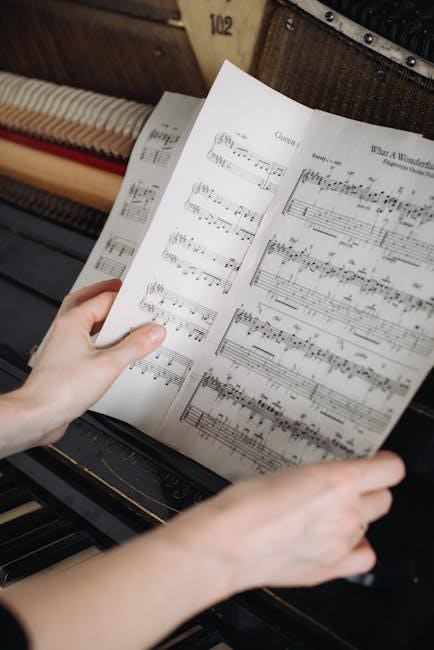
SHEETMUSIC-FREE.COM provides a dedicated resource for finding “What a Wonderful World” sheet music in PDF format, specifically tailored for piano. The website offers a piano solo scoring of Louis Armstrong’s classic, presented across three pages. This version is originally composed in F Major, making it accessible for many pianists.
The site allows for direct download of the PDF, including the song’s lyrics alongside the musical notation. It’s a convenient option for those seeking a readily available, piano-focused arrangement. Users can quickly access and begin practicing this beloved song. The availability of lyrics alongside the music is a significant benefit for singers and those learning the song simultaneously.
Other Online Sheet Music Retailers
Beyond MuseScore and SHEETMUSIC-FREE.COM, numerous online retailers offer “What a Wonderful World” sheet music in PDF format. These include established platforms like Musicnotes.com and Sheet Music Plus, providing a wider selection of arrangements and instrumentations.
These retailers often feature officially licensed sheet music, ensuring accuracy and quality. You can typically find versions for piano, guitar, vocal arrangements, and even ensembles. Expect a range of price points and difficulty levels, catering to both beginners and experienced musicians. Exploring these options expands your choices beyond free resources, potentially offering more polished and diverse arrangements of this timeless classic.
Sheet Music Formats and Availability
PDF is the dominant format for online sheet music, offering easy access and printing. Arrangements exist for piano, guitar, flute, and other instruments.
PDF Format Explained
The PDF (Portable Document Format) is the most prevalent way to distribute sheet music digitally. Its key advantage lies in its universal compatibility – PDFs can be viewed on virtually any device with a PDF reader, preserving the original formatting regardless of the operating system.
For musicians seeking “What a Wonderful World” sheet music, PDFs offer a convenient and cost-effective solution. They allow for easy downloading, printing, and storage. Many websites, including MuseScore.com and SHEETMUSIC-FREE.COM, specialize in providing sheet music in this format.
PDFs also support features like zoom functionality, making it easier to read complex musical passages. Furthermore, they are generally smaller in file size compared to other formats, facilitating quicker downloads and reduced storage space requirements. This makes accessing and utilizing the sheet music a seamless experience.
Piano Sheet Music – The Most Common Format
When searching for “What a Wonderful World” sheet music PDF, piano arrangements are overwhelmingly the most readily available. This is due to the song’s harmonic structure lending itself beautifully to the piano, and the instrument’s popularity among musicians.
Websites like MuseScore.com and SHEETMUSIC-FREE.COM host numerous piano sheet music versions, ranging from beginner-friendly simplified arrangements to more complex, original transcriptions. These PDFs typically include the melody line, chords, and lyrics, allowing pianists to learn and perform the song.
The prevalence of piano sheet music also means a wider selection of arrangements and interpretations are accessible, catering to different skill levels and musical preferences. Finding a suitable piano PDF for “What a Wonderful World” is generally straightforward.
Guitar Sheet Music and Tabs
Alongside piano arrangements, guitar sheet music and tablature (tabs) for “What a Wonderful World” are frequently sought after in PDF format. While perhaps not as abundant as piano scores, a substantial collection exists online, catering to guitarists of all levels.
MuseScore.com is a valuable resource, offering both standard notation sheet music and guitar tabs. Tabs represent the fretboard visually, simplifying learning for those unfamiliar with traditional music reading.
Guitar arrangements often focus on fingerstyle or strumming patterns, adapting the song’s melody and chords for the instrument. PDFs may include chord diagrams and lyrics, aiding in performance. The availability of both sheet music and tabs provides guitarists with flexible learning options.
Flute and Other Instrument Arrangements
Beyond piano and guitar, “What a Wonderful World” sheet music in PDF format extends to arrangements for various instruments, including the flute. These adaptations broaden the song’s accessibility and appeal to a wider range of musicians.
MuseScore.com consistently provides flute sheet music, often transcribed from the original or piano arrangements. These versions typically prioritize the melody, allowing flutists to capture the song’s emotional core.
PDFs for other instruments – clarinet, saxophone, even strings – can also be found, though availability may vary. These arrangements often require some musical adaptation skills. The core harmonic structure remains consistent, making transposition feasible for skilled musicians.

Understanding Sheet Music Components
Decoding sheet music involves recognizing key signatures (F Major), time signatures, melody notation, and chord progressions – essential elements for playing “What a Wonderful World.”
Key Signatures (F Major)
Understanding the key signature is fundamental to playing “What a Wonderful World” accurately. The song is predominantly written in F Major. This key signature features one flat – Bb – which affects the B notes throughout the piece, lowering them by a half step.
Recognizing this flat is crucial when reading the sheet music. It impacts both the melody and the chords. Sheet music PDFs will clearly display this flat symbol at the beginning of each staff.
For beginners, it’s helpful to practice identifying all the B notes and consciously flattening them to F Major’s Bb. This ensures correct pitch and harmonic context. Mastering the F Major key signature unlocks a deeper understanding of the song’s musical structure and allows for a more expressive performance.
Time Signatures
The time signature dictates the rhythmic structure of “What a Wonderful World,” and most sheet music PDFs will display 4/4 time. This means there are four beats in each measure, with a quarter note receiving one beat.
Understanding 4/4 time is essential for maintaining a steady tempo. Count “1, 2, 3, 4” repeatedly while playing to internalize the beat.
Sheet music will visually represent this with a fraction-like symbol. The top number (4) indicates the beats per measure, and the bottom number (4) signifies the note value that receives one beat.
Accurate rhythm is vital for capturing the song’s gentle and heartwarming feel. Practice with a metronome to develop a consistent and nuanced rhythmic foundation.
Melody and Notation Symbols
“What a Wonderful World” sheet music utilizes standard musical notation symbols to represent the melody. These include the staff, clef (typically treble clef), and notes indicating pitch and duration.
Note stems and flags denote rhythmic values – whole, half, quarter, and eighth notes – crucial for accurate timing. Sharps (#) raise a note by a half step, while flats (♭) lower it.
Dynamics markings (p for piano, mf for mezzo forte) guide expressive playing, indicating volume levels.
Slurs and ties connect notes, influencing phrasing and rhythm. PDF sheet music clearly displays these symbols, enabling musicians to faithfully recreate Louis Armstrong’s iconic melody.
Chord Progressions
The harmonic foundation of “What a Wonderful World,” as depicted in its sheet music PDF, centers around a relatively simple, yet emotionally resonant chord progression. Predominantly in F Major, the song frequently employs chords like Fmaj7, Bbmaj7, Ebmaj7, and C7.
These chords are often presented with slash notation, indicating inversions that create smoother voice leading.
PDF versions often include chord symbols above the melody line, assisting guitarists and pianists in accompanying the tune. Understanding these progressions is key to capturing the song’s gentle, hopeful mood.
The chord changes are generally predictable, making it accessible for beginner musicians while still offering harmonic richness.

Different Versions and Arrangements
Numerous arrangements of “What a Wonderful World” sheet music PDFs exist, ranging from Louis Armstrong’s original to Jon Batiste’s interpretation and simplified beginner versions.
Louis Armstrong’s Original Arrangement
The original sheet music PDF for Louis Armstrong’s “What a Wonderful World” faithfully represents his iconic 1967 recording. These versions, often scored for piano and vocal, showcase the song’s signature chord progressions in F Major.
Many available PDFs include both melody lines and lyrics, allowing musicians to replicate Armstrong’s phrasing and emotional delivery. SHEETMUSIC-FREE.COM offers a 3-page piano solo arrangement.
These arrangements typically feature standard musical notation, including key signatures, time signatures, and dynamic markings. Musicians can find versions displaying the melody and chord progressions, utilizing symbols for pitch, rhythm, and tempo.
Exploring these original arrangements provides invaluable insight into the song’s harmonic structure and Armstrong’s unique musical style, offering a genuine experience for performers.
Jon Batiste’s Interpretation
Jon Batiste’s rendition of “What a Wonderful World” offers a contemporary take on the classic, and sheet music PDFs reflecting his arrangement are readily available. MuseScore.com hosts free sheet music for Batiste’s version, catering to piano, guitar, flute, and other instruments.
These PDFs often incorporate Batiste’s stylistic nuances, potentially including altered harmonies or rhythmic variations compared to the original. Musicians seeking a fresh perspective will find these arrangements inspiring.
The sheet music typically maintains the song’s core melody while showcasing Batiste’s improvisational flair.
Whether you’re a beginner or an experienced musician, exploring Batiste’s interpretation through accessible PDF sheet music provides a unique and engaging musical experience.
Simplified Arrangements for Beginners
For those new to playing “What a Wonderful World,” simplified sheet music PDFs are invaluable. These arrangements reduce the complexity of the original, often featuring fewer chords and easier rhythms.
Many websites, including MuseScore.com, offer beginner-friendly versions tailored for piano and guitar. These simplified scores prioritize accessibility, allowing learners to grasp the song’s essence without overwhelming technical challenges.
Typically, these PDFs will utilize basic chord voicings and omit intricate embellishments.
Beginners can build confidence and musicality by mastering these arrangements before tackling more advanced versions. Finding these resources online makes learning this timeless classic achievable for everyone.
Piano Solo Arrangements
Piano solo arrangements of “What a Wonderful World” offer a richer, more expressive experience for intermediate to advanced pianists. These PDFs often feature elaborate introductions, interludes, and harmonic variations beyond the basic chord progressions.
SHEETMUSIC-FREE.COM and other retailers provide downloadable piano solo scores, typically spanning three or more pages. These arrangements showcase the melody with accompanying left-hand patterns, creating a fuller sound.
Players can explore different interpretations and add their personal touch to the iconic tune.
These arrangements demand a stronger technical foundation, but reward the effort with a captivating and nuanced performance of this beloved standard.

Using Sheet Music Effectively
Mastering “What a Wonderful World” requires understanding basic music reading, practicing with a metronome, and incorporating dynamics for a truly expressive performance.
Reading Sheet Music Basics
Decoding sheet music begins with understanding fundamental elements. The staff consists of five lines and four spaces, each representing a specific pitch. Clef symbols, like the treble or bass clef, define these pitches. Notes indicate pitch and duration, while rests denote silence.
For “What a Wonderful World,” familiarity with F Major is crucial, as many arrangements are in this key. Pay attention to time signatures – typically 4/4 – which dictate the beat structure. Recognize symbols for sharps, flats, and naturals, influencing the notes played.
Practice identifying notes quickly and understanding their rhythmic values. Gradually build your ability to translate the visual representation on the page into accurate musical performance. Resources like online tutorials can greatly assist this process.
Practicing with a Metronome
A metronome is an invaluable tool for mastering “What a Wonderful World” from sheet music. It establishes a consistent tempo, crucial for accurate rhythm and timing. Start slowly, selecting a BPM (beats per minute) that allows comfortable playing. Gradually increase the tempo as proficiency grows.
Focus on aligning your playing precisely with each beat. Subdivide beats internally to ensure evenness, especially during complex rhythmic passages. The song’s gentle flow benefits from a steady pulse.
Utilize the metronome for specific sections challenging to play in time. Practice repeatedly until those sections are seamless; Consistent metronome use builds internal rhythm and enhances musicality.
Adding Dynamics and Expression
Beyond accurate notes, “What a Wonderful World” thrives on nuanced dynamics and heartfelt expression. The sheet music provides a foundation, but interpretation is key. Consider Louis Armstrong’s original recording – notice the subtle swells and diminuendos.
Experiment with piano (soft) and forte (loud) passages to emphasize lyrical phrases and emotional peaks. Use crescendos and decrescendos to build and release tension.
Pay attention to phrasing; slight pauses and rubato (flexible tempo) can enhance the song’s beauty. Infuse your playing with feeling, conveying the song’s optimistic message.
Tips for Learning the Song
Start slowly! Don’t rush through the sheet music. Focus on accuracy before speed. Break the song into smaller sections – perhaps phrase by phrase – and master each before combining them.
Utilize online resources. Piano tutorials and guitar tab websites can offer visual and auditory guidance. Practice with a metronome to develop consistent timing.
Listen repeatedly to Louis Armstrong’s original recording to internalize the song’s phrasing and feel. Don’t be afraid to simplify arrangements initially, especially if you’re a beginner.
Copyright and Legal Considerations
Understanding the public domain status is crucial when using “What a Wonderful World” sheet music PDF, alongside licensing rules for performances and respecting copyright laws.
Public Domain Status
Determining the public domain status of “What a Wonderful World” sheet music is essential for legal usage. While Louis Armstrong’s original performance is protected by copyright, arrangements and transcriptions can vary. Generally, the song itself may be entering the public domain in some jurisdictions, but specific sheet music arrangements often retain copyright protection held by the publisher or arranger.
This means freely downloadable PDFs might be subject to copyright restrictions, even if the core melody isn’t. Users should verify the copyright information accompanying any sheet music PDF before using it for public performance or distribution. Carefully review licensing terms on sites like MuseScore and SHEETMUSIC-FREE.COM to ensure compliance and avoid potential legal issues. Always prioritize respecting the rights of copyright holders;
Licensing for Performance
Performing “What a Wonderful World” publicly, even with legally obtained sheet music PDF, often requires licensing. This applies to concerts, recitals, or any event where an audience is present and a fee is charged for admission. Organizations like ASCAP, BMI, and SESAC collect royalties for public performances of copyrighted songs.
If you intend to perform the song, you may need to obtain a performance license from these organizations. The specific requirements depend on the venue size, frequency of performances, and other factors. Downloading a PDF from MuseScore or SHEETMUSIC-FREE.COM doesn’t automatically grant performance rights; separate licensing is usually necessary to legally perform the work.
Respecting Copyright Laws
While many “What a Wonderful World” sheet music PDFs are available online, respecting copyright is crucial. Downloading from unauthorized sources constitutes infringement, even if the sheet music appears freely accessible on sites like SHEETMUSIC-FREE.COM. Copyright protects the composer and publisher’s rights to their work.
Always verify the legitimacy of the source before downloading. MuseScore.com generally offers legally shared arrangements, but always check licensing terms. Using copyrighted material without permission can lead to legal consequences. Supporting legitimate sheet music retailers ensures artists and creators are fairly compensated for their work, fostering continued musical creativity.

Resources for Learning to Play
Numerous online tutorials and websites offer guidance, including piano lessons and guitar tabs, to help musicians master “What a Wonderful World” from sheet music.
Online Piano Tutorials
Numerous platforms provide piano tutorials specifically designed to help learners tackle “What a Wonderful World.” YouTube is a treasure trove, offering lessons ranging from beginner-friendly walkthroughs to more advanced interpretations. Many instructors break down the song into manageable sections, focusing on the melody, chords, and dynamics.
Websites like Flowkey and Skoove offer interactive learning experiences, providing real-time feedback as you play along with the sheet music. These platforms often feature arrangements tailored to different skill levels. Additionally, dedicated piano tutorial websites often showcase step-by-step guides, complementing the PDF sheet music and enhancing the learning process. These resources bridge the gap between reading notation and confidently playing this timeless classic.
Guitar Tab Websites
For guitarists seeking to learn “What a Wonderful World,” numerous websites offer tablature (tabs) alongside standard sheet music options. Ultimate-Guitar.com is a popular resource, boasting a vast library of user-submitted tabs, often including multiple arrangements with varying difficulty levels. Songsterr provides interactive tabs with synchronized playback, allowing you to hear how each note should sound.
These tabs translate the piano sheet music’s chords and melody into guitar-friendly fingerings. Many sites also offer chord diagrams and strumming patterns to aid beginners. While tabs don’t display traditional musical notation, they provide a quick and accessible way to learn the song, complementing PDF sheet music for a comprehensive learning experience.
Music Theory Resources
Understanding music theory enhances your ability to learn and interpret “What a Wonderful World” sheet music. Teoria.com offers interactive exercises covering key signatures, time signatures, and chord progressions – all crucial elements found within the song’s arrangement. Musictheory.net provides comprehensive lessons and tools for grasping fundamental concepts like melody and notation symbols.
These resources demystify the language of music, allowing you to analyze the song’s harmonic structure and melodic phrasing. Knowing the key of F Major, for example, will aid in sight-reading and memorization. Utilizing these tools alongside sheet music PDF versions empowers musicians to move beyond rote learning and develop a deeper musical understanding.